



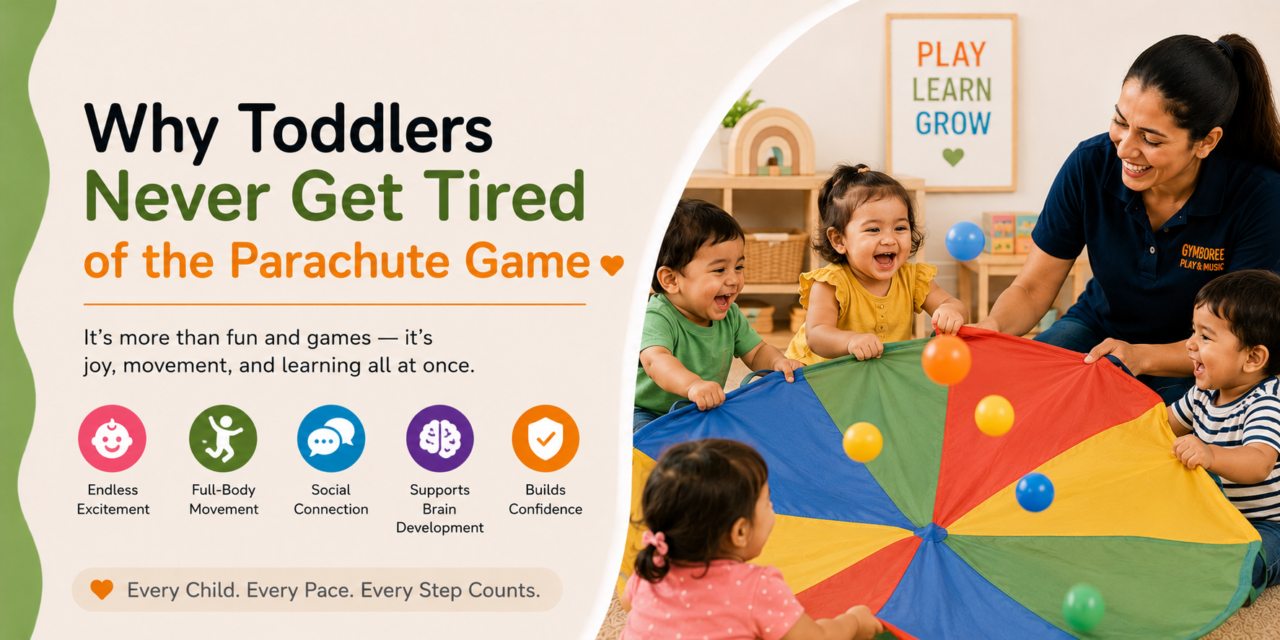
Every toddler class has that one moment when the energy in the room suddenly changes. The giant rainbow parachute comes out. Children who were quietly sitting beside parents seconds earlier immediately stand up. Some run toward it excitedly. Others stare at it carefully from a distance before slowly walking closer. Then the parachute starts moving. Up. Down. Up again. And suddenly the entire room is laughing. To adults, it looks like a simple game. Just colorful fabric floating through the air while children run underneath it. But toddler instructors know something parents slowly notice too. The parachute game does much more than entertain children. A surprising amount of learning happens underneath that giant rainbow circle. Toddlers Learn Best Through Movement Young children understand the world physically first. Before toddlers fully explain thoughts with words, they learn through movement, repetition, touch, sound, and observation. That is why activities involving the whole body tend to hold toddler attention longer than adults expect. The parachute game works so well because it combines several things toddlers naturally love at the same time:
Thank you for reading this post, don't forget to subscribe!- Movement
- Music
- Color
- Repetition
- Social interaction
- Sensory stimulation
- Predictable rhythm
For children, it feels exciting without becoming overwhelming. That balance matters during early childhood. Why Group Activities Feel Different for Toddlers One interesting thing about parachute activities is that children participate together automatically. No toddler can lift a giant parachute alone. The game only works when everyone holds on, moves together, and responds to the same rhythm. That shared experience teaches social behavior naturally without children realizing it.
Toddlers begin learning things like
- Waiting briefly
- Following group movement
- Watching other children
- Participating in routines
- Feeling included in shared activities
Even shy toddlers often become more comfortable during parachute games because the focus stays on movement rather than direct interaction. Nobody has to “perform.” They simply join the rhythm of the activity. The Predictability Helps Children Feel Safe Toddlers love routines more than adults sometimes realize. The parachute game follows a rhythm children quickly begin recognizing. Lift. Lower. Run underneath. Sit down. Repeat. That predictability helps toddlers feel emotionally comfortable because they know what happens next. Children who feel safe usually participate more confidently over time. This is especially noticeable with cautious toddlers. Many children spend their first classes observing activities carefully before slowly joining in once they understand the routine. Parents often worry when toddlers hesitate initially, but observation is part of learning too. Then suddenly one week the child grabs the parachute confidently like they have always done it. Why Toddlers Love Watching Things Move There is also a sensory reason parachute activities work so well. Toddlers are naturally fascinated by movement. Watching the parachute rise and fall helps children practice visual tracking skills, meaning their eyes learn to follow moving objects smoothly through space. That may sound technical, but it matters during early childhood development because visual tracking later supports activities like reading, coordination, and focus. Children are practicing attention skills without realizing it while staring up at the floating fabric overhead. The bubbles often added during parachute games make this even more engaging for toddlers because children instinctively track movement through the air. Physical Confidence Builds During Play Parents sometimes think parachute games are mostly social activities, but they involve physical development too. Toddlers move constantly during the activity. They crawl underneath the parachute. Run around it. Lift it overhead. Balance while changing directions quickly. All of this supports coordination and body awareness naturally through play. For toddlers, movement is learning. Physical activities help children understand where their body exists in space. That awareness becomes important later for everything from balance to fine motor control. Children who participate in movement-based play regularly often become physically confident gradually without formal instruction. The Emotional Side of Group Play Matters Too Toddler classes are not always perfectly calm. Someone usually cries eventually. Another child lets go of the parachute halfway through because they spotted bubbles somewhere else. One toddler may decide sitting underneath the parachute is terrifying while another refuses to leave it. That unpredictability is normal. But over time, children slowly become more emotionally comfortable participating in group activities.
Simple experiences like holding the parachute together help toddlers build
- Confidence
- Social comfort
- Emotional security
- Familiarity with routines
- Trust in group environments
For many young children, these classes are their first experience participating alongside peers regularly. That adjustment takes practice. Parents Usually End Up Loving the Parachute Too One funny thing about toddler classes is how often parents become emotionally attached to activities they originally considered silly. The parachute game is usually one of them. At first glance, it seems simple. Then parents start noticing things. Their shy toddler finally participating willingly. Their child laughing uncontrollably during bubbles for the first time that week. The way children naturally cooperate without being forced. The familiar songs and routines gradually making toddlers more comfortable each session. Suddenly the parachute becomes more than fabric floating around a room. It becomes part of a routine children genuinely look forward to. Why Simpler Activities Often Work Best Modern toys and digital entertainment try very hard to capture children’s attention constantly. Flashing lights. Fast sounds. Endless stimulation. But toddlers often stay engaged longer with surprisingly simple activities instead. A parachute. Music. Bubbles. Movement. These activities leave room for imagination and interaction rather than overstimulating children continuously. That is one reason many parents now prefer toddler environments focused on sensory play, movement, and social interaction instead of heavy screen-based entertainment. Children do not always need more stimulation. Sometimes they simply need better engagement. The Best Toddler Activities Usually Feel Simple Adults often assume learning should look structured and obvious. Toddlers usually learn best in ways that feel playful instead. That is why activities like parachute games remain popular year after year in early childhood programs. Children are developing coordination, attention, confidence, sensory awareness, emotional comfort, and social skills all while laughing underneath floating rainbow fabric. They are learning constantly. It just does not look like traditional learning yet. And honestly, that is part of what makes the toddler years so interesting to watch. Because some of the biggest developmental moments happen during activities that adults almost overlook completely.
Frequently Asked Questions
Why do toddlers enjoy parachute games?
Parachute games combine movement, rhythm, color, and social interaction, which naturally engage toddlers during play.
What skills do parachute activities develop?
These activities support coordination, listening, visual tracking, teamwork, and social participation.
How do group games help toddler social development?
Group games teach toddlers shared routines, turn-taking, observation, and confidence around peers.
