



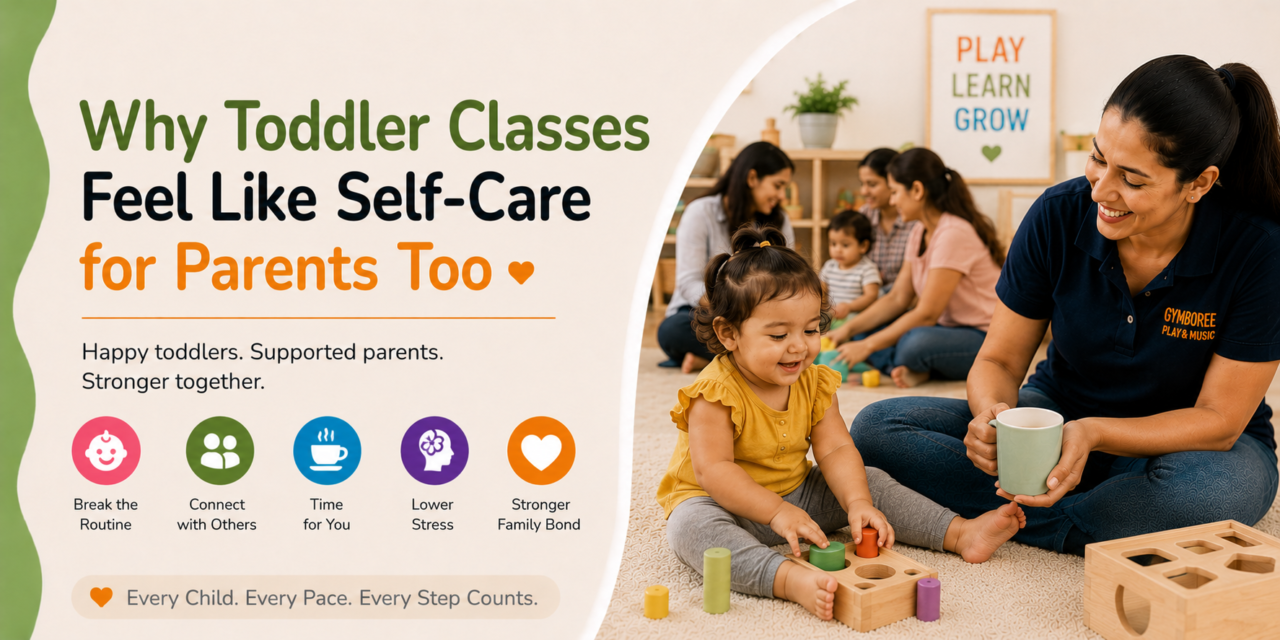
A lot of parents sign up for toddler classes because they want social interaction for their child. Then something unexpected happens. The classes start helping the parents too. Not in some dramatic, life-changing way overnight. More quietly than that. A conversation with another exhausted parent during bubble time. Forty-five minutes where nobody asks you for snacks every three seconds. Watching your toddler finally participate confidently after weeks of hesitation. Leaving the class feeling strangely lighter than when you arrived. The toddler years can feel isolating in ways people rarely talk about honestly enough. Days blur together. Sleep schedules control everything. Adult conversations disappear for stretches of time. Sometimes parents realize halfway through the day they have barely spoken to another grown-up properly. That is one reason group toddler classes matter more than people think. They create small pockets of routine, community, and movement for both children and parents. Parenting Toddlers Can Feel Repetitive Toddlers are funny, energetic, and lovable. They are also relentless. The same snacks every day. The same songs repeated twenty times. Tiny emotional breakdowns over socks, bananas, or the wrong spoon. Most parents love their children deeply while also feeling mentally drained sometimes. Both things can exist together. The difficult part is that toddler parenting often happens inside routines that feel very repetitive. Especially for stay-at-home parents or families without much nearby support. Some days the biggest outing becomes grocery shopping before nap time. That is why many parents start searching for toddler activities not only for child development, but simply to break the routine a little. Group Classes Create Structure During Long Weeks One small thing parents underestimate is how helpful routine feels during early childhood years. Having one or two scheduled classes each week gives shape to days that otherwise blur together. Tuesday becomes music class day. Saturday morning means parachute games and sensory play. Toddlers benefit from predictable routines, but honestly, adults do too. Many parents say their children wake up excited on class mornings because the environment becomes familiar over time. The songs, activities, instructors, and routines start feeling comfortable. Parents feel it too. Even getting dressed and leaving the house with a purpose can improve the mood of an entire day sometimes. Parents Need Other Parents Around Them One of the best parts of toddler classes usually happens in the background. The adult conversations. They are rarely deep at first. Mostly quick exchanges while children crawl through tunnels nearby. “How old is yours?” “Mine refuses vegetables too.” “Are naps still a disaster for you?” These conversations may seem small, but they matter. Toddlers can unintentionally isolate parents because daily schedules become so child-focused. Group classes create opportunities for adults to interact with people going through similar stages of life. And honestly, there is comfort in realizing everyone else’s toddler is also slightly chaotic sometimes. Watching Children Around Other Kids Changes Things Many parents spend large parts of the toddler years wondering if their child is developing normally. Are they social enough? Too shy? Too energetic? Too emotional? Toddler classes quietly answer some of those worries because parents begin seeing how differently children behave naturally. One toddler climbs fearlessly. Another sits cautiously beside a parent for weeks before participating. One child talks nonstop. Another observes quietly. Seeing those differences helps many parents relax a little. Children develop unevenly, and group environments make that very obvious quickly. Confidence Often Builds Slowly Parents sometimes expect toddler progress to look dramatic. Usually it happens gradually. A child who cried during the first class suddenly walks into the room confidently after a month. A shy toddler finally joins the parachute game independently. A child who refused group activities starts dancing during familiar songs without hesitation. These moments feel surprisingly emotional for parents because they represent more than just participation. They show growing confidence. Watching children slowly become comfortable in social spaces gives parents reassurance too. Movement Helps Everyone Feel Better One thing toddler classes understand well is that young children need movement constantly. Running. Climbing. Balancing. Dancing. Crawling. Toddlers regulate emotions through movement long before they explain feelings clearly with words. Parents notice the difference afterward too. Children who spend time actively engaged often seem calmer later, even if they looked energetic during the class itself.
Thank you for reading this post, don't forget to subscribe!Physical activity supports
- Better sleep
- Emotional regulation
- Coordination
- Attention span
- Confidence
- Social interaction
And honestly, watching children burn energy somewhere other than the living room sofa helps parents breathe easier too. The Classes Give Parents Permission to Relax Slightly At home, parents are usually multitasking constantly. Cleaning something. Preparing food. Stopping dangerous climbing attempts every four minutes. During toddler classes, some of that pressure lifts temporarily because the environment is designed for children already. The climbing equipment is safe. The activities are structured. The instructors lead transitions. Parents can step back slightly instead of managing every second directly. That mental break matters more than many people realize. Not because parents stop parenting during class. Because they finally share the responsibility of entertaining toddlers for a little while. Nobody Expects Perfect Toddlers There This part matters too. Toddler classes work well because everyone understands toddlers behave like toddlers. Some children cry. Some refuse activities completely. Some spend the entire class running in random circles. Nobody is shocked by emotional meltdowns over bubbles or parachutes. That acceptance makes the environment feel less stressful for parents too. No one expects perfection. Childhood Feels Less Overwhelming in Community The toddler years can feel long while they are happening. The routines are exhausting. The emotional ups and downs happen daily. Parents spend huge amounts of time focused entirely on someone else’s needs. Having spaces where children can play safely while adults connect with each other changes the emotional rhythm of parenting a little. Even simple conversations help. Even watching another exhausted parent laugh through toddler chaos helps. Sometimes Parents Need the Class as Much as the Kids Most families sign up because they think their toddler needs social interaction, movement, or stimulation. Usually that is true. But many parents quietly realize they needed the environment too. The structure. The conversations. The reassurance. The routine. The reminder that other families are experiencing the exact same stage of life at the same time. Toddler classes may revolve around bubbles, music, tunnels, and parachutes. Still, for many parents, they also become one of the few places during early childhood where nobody feels like they are figuring it out alone anymore.
Frequently Asked Questions
How do toddler classes help parents?
Toddler classes provide routine, social connection, emotional support, and engaging environments for both parents and children.
Why is community important during early parenting?
Connecting with other parents helps reduce isolation and creates emotional support during the toddler years.
Can toddler classes improve daily routines for children?
Yes, structured play sessions often help toddlers feel calmer, more active, and emotionally settled afterward.
