



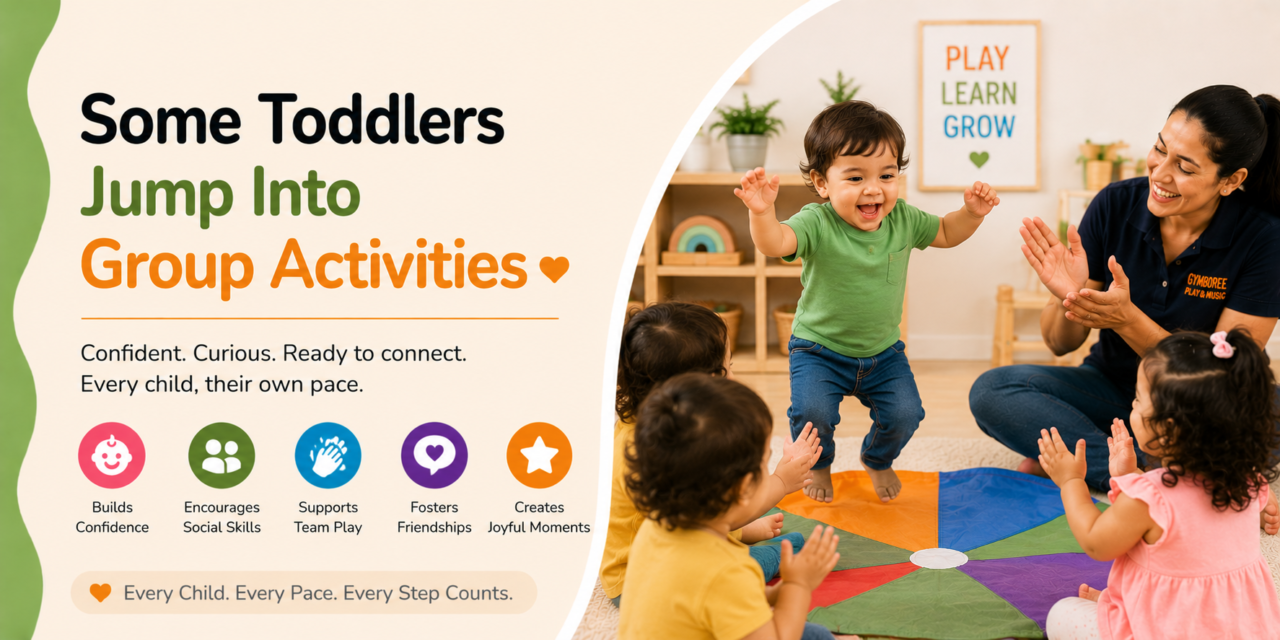
A toddler stood near the entrance of class holding his mother’s hand with both of his. Inside the room, the music had already started. A few children were running toward the parachute. Another toddler was laughing at bubbles floating near the mats. He wanted to watch. That part was obvious. But every time his mother gently encouraged him to join, he pulled back again and buried his face against her leg. Parents know this feeling well. You start wondering whether your child is shy, anxious, behind socially, or simply having an off day. Then usually, somewhere around the middle of class, something changes quietly. The toddler who refused to participate suddenly crawls toward the tunnel alone. Or reaches for the parachute. Or smiles at another child nearby without hiding immediately afterward. Tiny moments. But parents notice them instantly because they know how much courage those moments actually take. Toddlers Do Not Walk Into New Spaces Like Adults Adults enter rooms and immediately understand what is happening. Toddlers do not. For young children, every new environment comes with unfamiliar sounds, unfamiliar adults, unfamiliar routines, unfamiliar children, and unfamiliar expectations all at once. That can feel like a lot. Some toddlers handle that uncertainty confidently. Others need time to study the room before feeling safe enough to explore. Neither response is wrong. Children simply process new experiences differently. Watching Quietly Is Still Part of Learning Parents often mistake observation for lack of confidence. But toddlers learn constantly by watching. A child standing beside a parent during music class is still absorbing information.
Thank you for reading this post, don't forget to subscribe!They are noticing
Who seems safe. What the routine looks like. When the music changes. How the other children react. Whether the environment feels predictable. Toddlers gather emotional information before participating physically sometimes. Adults forget this because we usually expect participation to happen immediately. Young children often need trust first. The Same Routine Starts Feeling Comfortable This is why toddler classes repeat so many activities every week. The same songs. The same parachute. The same goodbye routine. Adults might crave variety, but toddlers usually relax through familiarity. A child who felt overwhelmed during the first class often behaves completely differently after several sessions because the environment stops feeling unpredictable. Parents usually notice the change suddenly. One week their toddler refuses to leave their side. The next week the child walks toward the play area independently without even looking back. The confidence did not appear overnight. The child simply became comfortable enough. Some Children Need Longer to Warm Up Parents compare toddlers constantly without meaning to. One child runs into class immediately. Another needs twenty minutes before touching anything. That difference often comes down to temperament, not intelligence or ability. Some children naturally move cautiously through unfamiliar situations. They observe first, then participate once they feel secure. And honestly, those children often become very confident later because they build trust carefully. Not every toddler is supposed to behave the same way socially. Emotional Safety Changes Everything Adults usually separate emotions from learning. Toddlers do not. A child who feels nervous or emotionally overwhelmed rarely explores freely. Meanwhile, children who feel safe usually become naturally curious. They climb more confidently. Participate more willingly. Interact socially more comfortably. That emotional security matters during early childhood because toddlers learn best once they stop focusing entirely on whether the environment feels safe. Then attention shifts toward play, movement, and interaction instead. Why Gentle Environments Matter Some toddler environments feel loud and chaotic immediately. Too much noise. Too many instructions. Too much happening all at once. Certain children shut down quickly in spaces like that, especially toddlers who are naturally cautious or sensitive. Calmer environments often work differently. Children still move, play, and explore, but there is enough space emotionally for them to process activities at their own pace instead of feeling rushed constantly. Parents usually notice when their child feels comfortable somewhere. The body language changes first. Less clinging. More curiosity. More willingness to move independently. Toddlers Borrow Confidence From Adults One thing early childhood instructors notice constantly is how strongly toddlers react to adult energy. If parents appear tense, apologetic, or anxious, children often become more uncertain too. When adults stay calm and relaxed, toddlers usually explore more comfortably because they use trusted adults as emotional reference points. This does not mean parents need to act perfectly. It simply means children look toward familiar adults while deciding whether situations feel safe. That is why many toddler classes encourage parent participation naturally during the beginning stages. Confidence builds gradually through connection first. Group Play Becomes Easier Over Time Parents sometimes assume socially confident toddlers are simply born that way. Usually confidence develops through repeated positive experiences. The child who hides during early classes eventually starts joining songs. The toddler who refused tunnels suddenly crawls through independently. Another child begins interacting with classmates after weeks of only observing silently. These changes rarely happen dramatically. They happen through repetition. Familiar routines. Predictable environments. Gentle encouragement. Time. The Smallest Changes Feel Huge to Parents One thing people rarely talk about is how emotional these moments feel for parents themselves. Watching your child independently join an activity after weeks of hesitation can honestly feel overwhelming. Because parents understand what outsiders cannot see. They know how much internal effort happened before that moment. A toddler reaching for bubbles may seem ordinary to everyone else in the room. To a parent, it sometimes feels enormous. Confidence During Childhood Usually Starts Quietly Adults imagine confidence as something obvious and loud. Toddler confidence usually looks smaller than that. Walking into class calmly. Joining a familiar song. Sitting near other children comfortably. Trying the climbing equipment without fear. These little moments matter because they become the foundation children carry into preschool and future social environments later. And most of the time, those moments begin after one important thing happens first. The child finally feels safe enough to explore.
Frequently Asked Questions
Why do toddlers need emotional safety to learn?
Toddlers explore and participate more confidently when they feel emotionally comfortable and secure in their environment.
Is observing during class normal for toddlers?
Yes, many toddlers observe quietly before participating because observation is part of how young children learn.
How do routines help toddlers feel confident?
Familiar routines create predictability, which helps toddlers feel safe and comfortable in group environments.
