



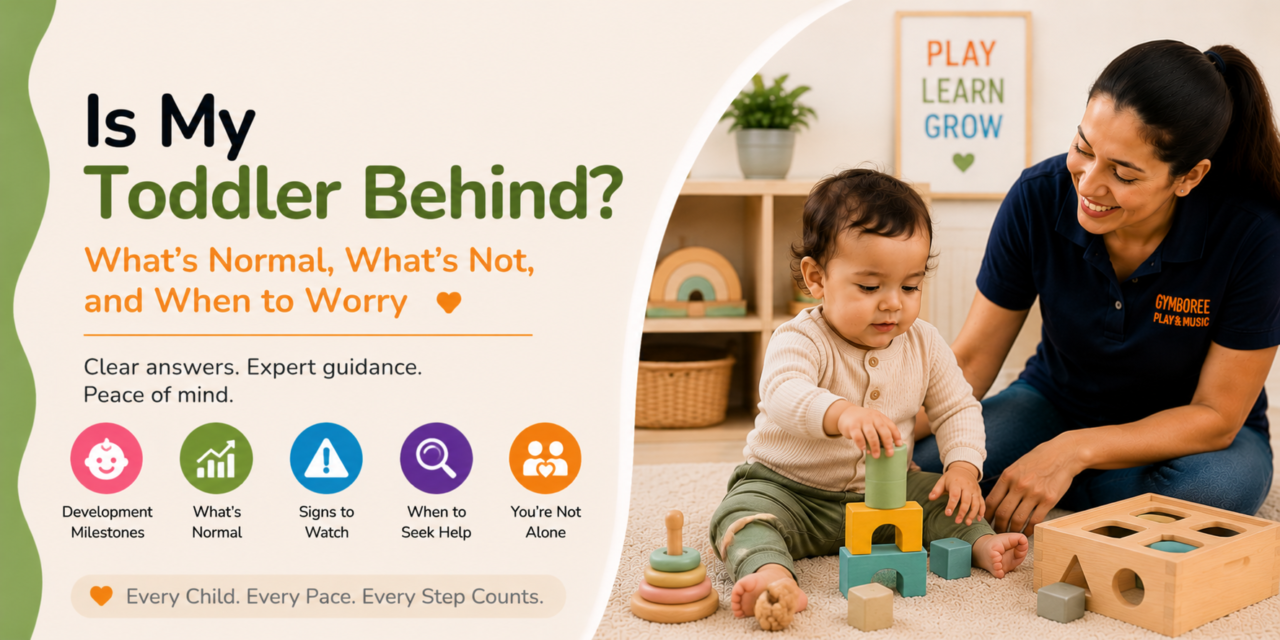
A mother sitting outside a toddler class once quietly asked another parent, “Your son is already speaking in full sentences?” The other parent nodded politely, and within seconds the first mother looked worried. Then came the familiar questions most parents ask themselves at some point during the toddler years. “Should mine be talking more by now?” “Am I doing something wrong?” “Why does every other child seem ahead?” Almost every parent experiences this kind of anxiety sooner or later. It usually starts innocently. Someone else’s child seems more social, more verbal, more independent, or more physically confident. Suddenly normal toddler behavior starts feeling like a comparison chart. The difficult part is that toddler development rarely follows a perfectly neat timeline. Children grow unevenly. And honestly, that is usually normal. Toddlers Develop Different Skills at Different Times Some toddlers talk early and climb late. Others run fearlessly but stay quiet around unfamiliar people for months. One child may confidently join group activities immediately while another needs weeks just to feel comfortable entering the room independently. Parents often expect development to move evenly across every area at once. Real life rarely works like that. A toddler who struggles with speech may have incredible physical confidence. A highly verbal child may still find social interaction overwhelming. Another child may observe quietly for weeks before suddenly becoming independent almost overnight. Children are not machines developing according to exact schedules. They are individuals. That difference matters more than people realize. Social Media Has Made Comparison Much Worse Parents today are exposed to constant updates about other children. Videos of toddlers reading early. Perfect milestone charts online. Parenting forums discussing what children “should” be doing by certain ages. Even casual conversations at playgroups can unintentionally create pressure. Most parents know logically that every child develops differently. Emotionally, though, comparison still happens very easily. Especially during the toddler years when development changes so quickly. One month a child barely speaks. Three months later they suddenly refuse to stop talking. Toddlers often develop in bursts instead of steady, predictable progress. Why Play-Based Environments Reveal So Much About Development One interesting thing about toddler classes is that they quickly show how differently children approach the same environment. Some children immediately climb everything. Others stay close to parents and observe quietly. One toddler may spend twenty minutes stacking blocks alone while another runs straight toward group activities. All of those responses are normal. Children process new situations differently depending on personality, temperament, confidence, sensory comfort, and emotional readiness. Good early childhood environments understand this. Not every child needs to participate the same way immediately. Some toddlers learn by jumping in directly. Others learn by watching carefully first. Both are still learning. The “Quiet Observer” Is Usually Learning More Than Parents Think Parents often worry most about children who appear hesitant in group settings. The toddler who refuses circle time. The child who clings during class. The one sitting beside a parent instead of joining activities right away. What adults sometimes miss is how much observation toddlers absorb internally. A child quietly watching another toddler climb is still processing the experience. They are studying movement, reactions, routines, and social behavior before deciding whether they feel ready to participate themselves. Then suddenly, usually when parents least expect it, they join in. Not because someone forced them. Because they finally felt comfortable enough. Confidence during early childhood often develops quietly before it becomes visible. Physical Milestones Also Vary More Than Parents Expect Parents compare physical development constantly too. Who climbed first. Who walked first. Who seems more coordinated. But physical confidence depends on many things beyond simple ability. Some toddlers naturally love movement and risk-taking. Others are cautious by personality. A careful child may take longer to attempt climbing activities simply because they think before acting. That hesitation is not failure. It is temperament. Once cautious children feel secure, they often become surprisingly capable physically because they approach movement thoughtfully. Toddler development is rarely just about skill. Personality plays a role too. Emotional Development Is Harder to Measure The biggest challenge with toddler development is that emotional growth does not always look obvious from the outside. Parents notice physical milestones easily because they are visible. But emotional development happens quietly.
Thank you for reading this post, don't forget to subscribe!Things like
- Recovering faster after frustration
- Feeling comfortable around groups
- Building trust with teachers
- Participating independently
- Managing transitions more calmly
- Showing curiosity instead of fear
These skills build gradually through repeated experiences. And unlike first words or first steps, there is rarely one dramatic moment announcing they happened. Why Children Need Space to Develop Naturally Parents sometimes feel pressure to constantly “improve” toddler development. More flashcards. More structured activities. More academic pressure earlier. But early childhood specialists consistently emphasize the importance of movement, social interaction, sensory play, and emotional security during the toddler years. Children develop best when they feel safe enough to explore naturally. Pressure often creates the opposite effect. A toddler repeatedly pushed into uncomfortable situations may become more resistant over time, not more confident. That is why good toddler programs focus heavily on creating emotionally comfortable environments first. Learning happens more naturally once children feel secure. Parents Usually Notice Progress Suddenly One funny thing about toddler development is how invisible progress feels until suddenly it does not. A parent worries for weeks because their child refuses group activities. Then one day the child joins the parachute game independently like it was never difficult at all. Another parent worries because their toddler barely speaks during class, then suddenly hears them singing full songs at home weeks later. Children often practice skills internally long before adults see clear results externally. That is why development can seem sudden when it actually has been building quietly underneath for months. No Child Follows a Perfect Timeline This part matters most. There is no universal toddler timeline where every child develops every skill at exactly the same pace. Some children need more time socially. Others need more time emotionally. Some become physically confident first. Others become verbal first. That variation is completely normal during early childhood. Of course, genuine developmental concerns should always be discussed with qualified professionals when needed. But many everyday parent worries come from comparison rather than actual developmental problems. Toddlers are still figuring out the world around them. And most of them are doing better than anxious parents think. Childhood Is Not a Race Parents naturally want reassurance that their child is doing okay. That instinct comes from love. But toddler development is not a competition where the earliest milestone wins. Children grow through repetition, movement, confidence, emotional safety, social interaction, and time. Sometimes a child simply needs more time before they are ready. And often, once they are ready, the progress comes much faster than anyone expected.
Frequently Asked Questions
Do toddlers develop at different speeds?
Yes, every toddler develops differently and some children become verbal earlier while others develop physical or social confidence first.
When should parents worry about developmental delays?
Parents should consult professionals if they notice significant concerns consistently, but many developmental differences are completely normal during toddler years.
How do toddler classes support development naturally?
Toddler classes encourage physical, emotional, sensory, and social development through age-appropriate play and interaction.
