



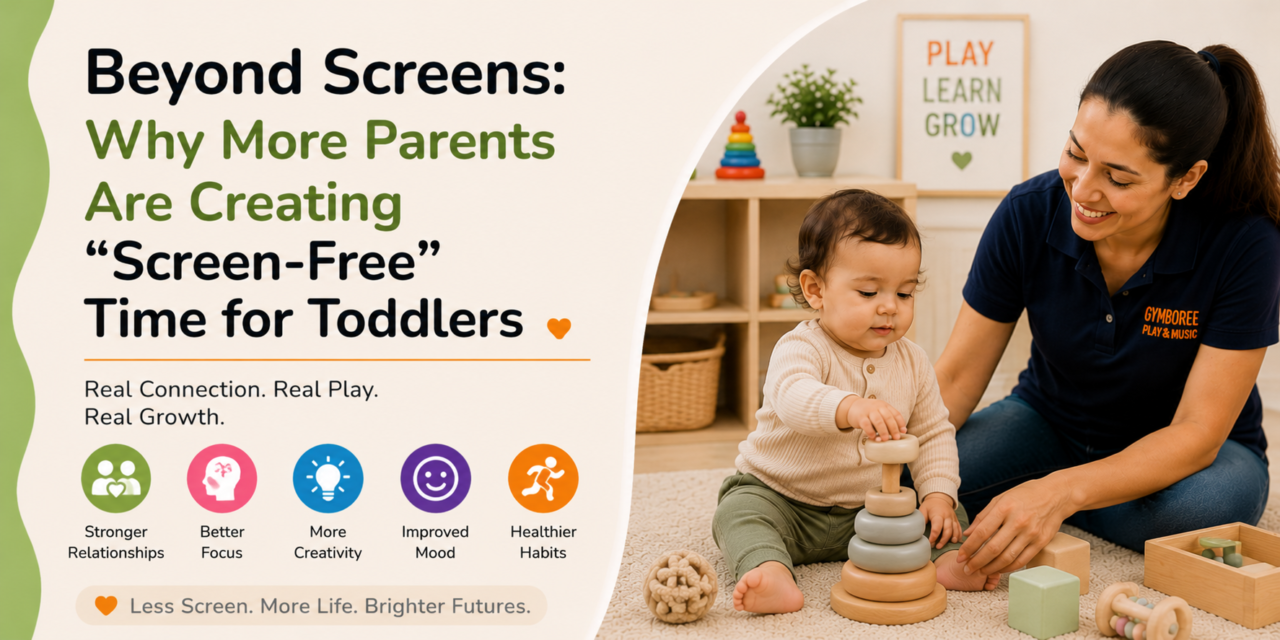
One mother at a toddler class in Dubai joked that her son could unlock a phone faster than his grandfather. Everyone laughed because it sounded familiar. Most parents are not trying to raise children around screens all day. It just happens gradually. A cartoon during breakfast. A phone during errands. Videos while cooking dinner. Sometimes parents simply need ten quiet minutes to get something done. No judgment there. Raising toddlers is exhausting. But many families eventually notice the same pattern. The more screen time increases, the harder it becomes to hold a toddler’s attention with ordinary activities afterward. Books feel boring. Toys get ignored quickly. Quiet play lasts two minutes before they ask for another screen. That is why more parents are intentionally creating screen-free spaces and routines during the early years. Not because technology is evil. Because toddlers still need real-world experiences more than digital ones. Toddlers Learn Best Through Real Interaction Young children understand the world through movement, touch, sound, and face-to-face interaction. They need to physically experience things. A toddler stacking foam blocks learns differently from a child tapping a screen game. One experience uses balance, coordination, problem-solving, and trial-and-error movement. The other mostly relies on fast visual response. Both hold attention. Only one fully engages the body and senses together. That difference matters during early childhood development because toddlers are still building foundational skills through physical exploration. This is one reason activities like music, sensory play, climbing, water activities, and pretend play remain so important during the toddler years. Children need experiences they can feel. Why Screens Affect Some Toddlers So Strongly Not every child reacts to screens the same way. Some toddlers transition easily afterward. Others become emotional, restless, or overstimulated very quickly.
Thank you for reading this post, don't forget to subscribe!Parents often describe similar situations
Their toddler watches cartoons quietly, but afterward struggles to settle into normal play. Bedtime becomes harder after too much screen exposure. Tantrums increase when devices are taken away. Attention spans during slower activities seem shorter. These reactions happen because screens move fast. Sounds, colors, images, and scene changes happen constantly. Toddler brains absorb all of that stimulation at once. Then ordinary life suddenly feels slower by comparison. A coloring activity cannot compete with rapid animation and nonstop visual stimulation. Neither can story time. That does not mean screens need to disappear completely. Most families live realistically. But balance becomes important. Why Simple Activities Hold Attention Longer Than People Expect One interesting thing about toddlers is how deeply they focus when they become genuinely engaged in physical play. Parents often assume children need louder, faster entertainment to stay interested. Usually, toddlers prove the opposite. Give a group of children bubbles, soft climbing mats, music, or sensory activities, and many will stay involved far longer than adults expect. Not because the activities are flashy. Because the children are participating directly. A child chasing bubbles is using movement, visual tracking, balance, and attention all together. A toddler climbing through tunnels is solving physical problems constantly while exploring independently. That engagement feels different from passive entertainment. Social Skills Cannot Fully Develop Through Screens Toddlers learn social behavior through real interaction. Watching another child laugh, wait for a turn, cry, dance, or share teaches lessons screens simply cannot recreate properly. During toddler classes, children begin learning how to exist alongside others. Not perfectly, of course. Someone will still cry because another child touched the wrong toy. But over time, children slowly begin understanding routines, boundaries, group activities, and social cues through repeated experiences.
These small moments help toddlers build
- Confidence around other children
- Patience
- Communication skills
- Emotional regulation
- Group participation
- Comfort in new environments
Those experiences become especially important before preschool years begin. Why Parents Are Reconsidering “Quiet Screen Time” A lot of parents originally turn to screens for understandable reasons. Sometimes they simply need a break. Toddlers require constant attention, and modern family schedules can feel nonstop. Screens offer temporary quiet in busy households. But many parents eventually realize that screen-based quiet often creates more restlessness later. Meanwhile, activities involving movement, sensory exploration, and social interaction tend to leave children calmer afterward, even when they seem energetic during the activity itself. That difference surprises people. Children usually regulate emotions better after active engagement than after long passive entertainment sessions. Creating Screen-Free Time Does Not Need to Be Extreme Some parents hear “screen-free” and immediately imagine unrealistic perfection. No television. No phones. No devices anywhere. That is not how most families live. In reality, small changes usually make the biggest difference.
Things like
- Keeping screens off during meals
- Creating one hour of device-free play each evening
- Prioritizing outdoor or sensory activities during weekends
- Choosing music or storytelling over videos sometimes
- Rotating toys to encourage deeper play
- Visiting toddler classes focused on movement and interaction
None of these changes need to feel strict or dramatic. The goal is not perfection. The goal is balance. Why Toddler Classes Feel Different From Screen Entertainment Parents often notice something interesting after attending movement-based toddler classes regularly. Children become excited before class starts. Not because of screens or flashy entertainment, but because they associate the environment with interaction, movement, music, and familiarity. Toddlers love routines when those routines feel emotionally safe. The welcome songs become familiar. The parachute games become predictable. The play equipment feels exciting without becoming overwhelming. That consistency helps children feel secure enough to participate confidently over time. Childhood Needs Real Experiences Some of the strongest toddler memories are built through ordinary physical experiences. Dancing badly during music time. Crawling through tunnels repeatedly for no reason. Laughing uncontrollably when bubbles land on someone’s head. Holding onto a rainbow parachute while other children run underneath it. These things may not look educational in traditional ways, but they help children build social confidence, coordination, emotional security, and curiosity naturally. That is why more parents are becoming intentional about reducing overstimulation during the early years. Not because they want perfectly screen-free childhoods. Because they want children to stay connected to real play while they still can.
Frequently Asked Questions
How much screen time is appropriate for toddlers?
Moderate and balanced screen time is generally recommended while prioritizing physical play, social interaction, and sensory activities during the early years.
What are the benefits of screen-free play?
Screen-free play improves focus, creativity, emotional regulation, social interaction, and physical development in toddlers.
Can toddler classes reduce screen dependency?
Yes, engaging movement-based and sensory activities often help toddlers enjoy real-world play more naturally.
