



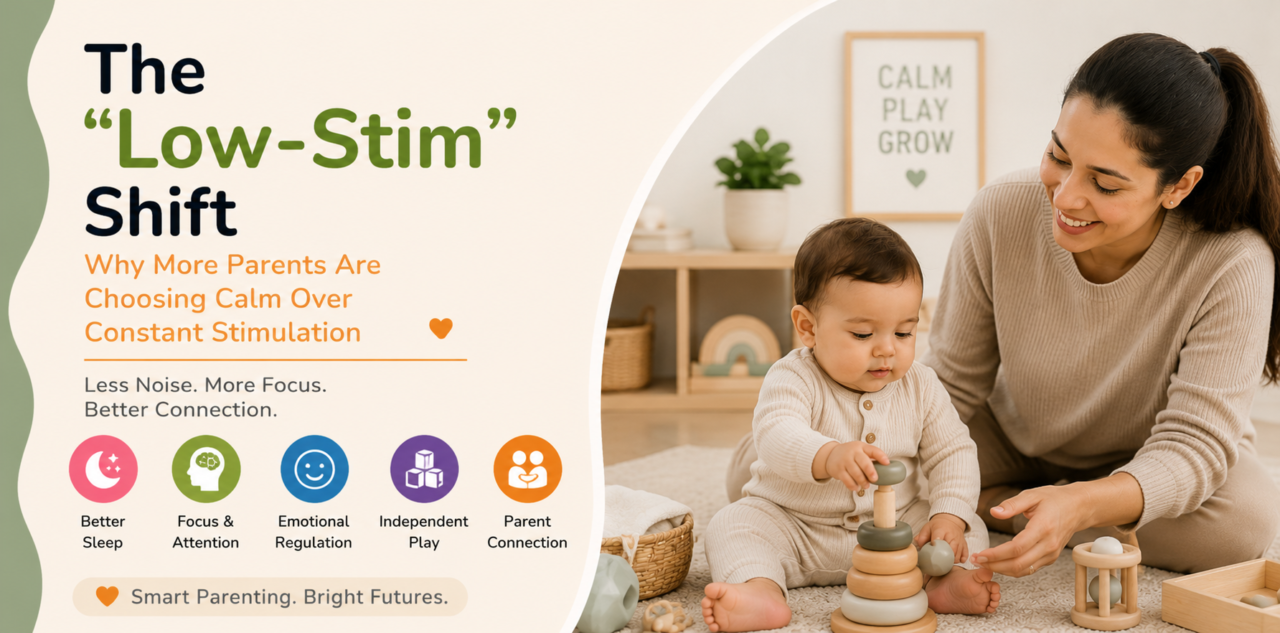
A lot of parents are quietly changing the way their toddlers play. Loud toys, nonstop cartoons, flashing screens, and battery-operated gadgets are slowly being replaced with calmer activities that give children more space to move, focus, and interact naturally. Low-stimulation play is becoming popular because many families are noticing the same thing: toddlers often behave better when life feels a little less noisy. One mother at a Gymboree class recently laughed while talking to another parent near the parachute circle. She said her daughter owned a toy that sang the alphabet, counted numbers, flashed lights, and somehow still managed to annoy everyone in the house within ten minutes. “But bubbles?” she said. “She’ll chase bubbles forever.” That conversation probably sounds familiar to a lot of parents. Children are naturally drawn to simple things when they are given the chance. A tunnel. A soft climbing mat. Music. Water play. A room full of movement and other children. It does not always take much to keep a toddler interested. Sometimes adults overcomplicate play because we assume children need constant entertainment. Most toddlers actually need the opposite. Why Overstimulation Happens So Easily Toddlers process the world differently from adults. Everything is new to them. Sounds feel louder. Lights feel brighter. Emotions feel bigger. A busy mall, a fast-moving cartoon, or a noisy toy might seem harmless for a short time, but too much stimulation throughout the day can leave some children feeling overwhelmed without being able to explain why. Parents usually notice it in small ways first. Their child moves quickly from one activity to another. Bedtime suddenly becomes harder. Tantrums increase for no obvious reason. They seem tired but cannot settle down. Sometimes the issue is not the child’s behavior itself. Sometimes their brain simply needs a calmer environment. That is one reason many parents in Dubai are becoming more intentional about the kinds of activities they choose during the early years. What Low-Stimulation Play Really Means Low-stim play does not mean silence or empty rooms with wooden toys only. It simply means activities that encourage children to participate without overwhelming their senses. At toddler age, simple activities usually work best anyway.
Thank you for reading this post, don't forget to subscribe!Things like
- Bubble play
- Music and movement
- Sensory activities
- Climbing and crawling
- Storytelling
- Pretend play
- Building blocks
- Group games
- Art and coloring
- Parachute activities
These experiences allow children to focus naturally instead of reacting to constant flashing lights or rapid sounds. At Gymboree classes, you can see this happen in real time. Some children walk into class shy and cling to their parents for the first few minutes. Then music starts, bubbles appear, or the parachute comes out, and suddenly they begin participating on their own. Not because someone forced them to. Because the environment feels safe enough to explore. The Attention Span Difference Is Real One thing many parents notice after reducing overstimulation is that their toddlers stay focused longer during simple activities. A child stacking foam blocks is doing much more than “playing.” They are learning balance, coordination, patience, and problem-solving all at once. When blocks fall, they try again. When a tunnel looks unfamiliar, they slowly work up the confidence to crawl through it. That kind of concentration develops naturally through hands-on play. Screen-based entertainment usually moves very quickly. Colors change fast. Sounds shift constantly. Toddlers do not need to create anything because the entertainment is already happening for them. Simple play works differently. The child becomes part of the experience instead of just watching it. Physical Play Helps More Than Parents Realize Toddlers are not designed to sit still for long periods. Their bodies are constantly looking for ways to move, climb, push, pull, jump, and explore. Physical play supports early childhood development in ways many people overlook.
It helps children
- Build coordination
- Improve balance
- Develop body awareness
- Release frustration
- Gain confidence
- Strengthen social interaction
There is also a noticeable emotional difference after active play. Children who spend time moving often sleep better and regulate emotions more easily afterward. That is one reason indoor play classes remain popular in Dubai, especially during hotter months when outdoor play becomes difficult during the day. Parents are not only looking for activities to “keep kids busy.” They are searching for spaces where children can move freely in a safe and structured environment. Children Need Social Play Too Another reason low-stimulation environments work well is because they encourage real interaction. Toddlers learn constantly by watching other children. They observe reactions, copy movements, share toys, and slowly understand social routines through repetition. During group play sessions, children begin learning skills that cannot be taught through screens.
Things like
- Waiting for turns
- Listening during group activities
- Following simple instructions
- Watching facial expressions
- Building confidence around other children
These moments may seem small, but they matter during the early years. A toddler who finally joins a group song after quietly observing for weeks is making progress. A child who shares bubbles with another toddler for the first time is learning social connection. Parents usually remember these moments far more than any educational app. Why Simpler Play Often Feels Better for Parents Too Most parents are overstimulated themselves. Work schedules, traffic, screens, notifications, errands, and everyday responsibilities already create enough noise during the week. Many families are beginning to realize their children benefit from slower environments because adults do too. That is why calmer play spaces feel different the moment you walk in. You notice conversation. Music. Laughter. Children moving around naturally instead of sitting silently with devices in their hands. It feels lighter. Not perfect. Toddlers are still toddlers. Someone will still cry because another child touched the wrong ball. But the energy feels calmer overall. Childhood Does Not Need Constant Noise Some of the most meaningful toddler moments are surprisingly simple. A child chasing bubbles across the floor. Crawling through a tunnel for the first time. Dancing during music class. Sitting under the parachute while laughing uncontrollably. These activities may not look impressive on social media, but they help children build confidence, emotional security, focus, and social skills in very real ways. That is why many families are stepping away from overstimulation and returning to simpler forms of play. Not because less is trendy. Because for toddlers, less often works better.
Frequently Asked Questions
What is low-stimulation play for toddlers?
Low-stimulation play focuses on simple calming activities like bubbles, music, sensory play, and movement that help toddlers stay engaged without overwhelming sounds or flashing distractions.
Can low-stim activities improve toddler focus?
Yes, activities like block play, climbing, and sensory exploration help toddlers concentrate naturally because they actively participate instead of passively watching screens.
Are screens harmful for toddlers?
Screens are not always harmful in moderation, but excessive screen exposure can overstimulate toddlers and affect sleep, focus, and emotional regulation.
